Technical Guide
Eleven off-road controls. One layered system. Every terrain scenario mapped.
From a pavement-safe full-time AWD mode all the way to a fully locked, sway-bar-disconnected
rock crawler with a ~86:1 crawl ratio, modern Jeep® Wranglers and Gladiators give you a
remarkably deep stack of off-road controls. Understanding what each setting does mechanically and
electronically — and critically, how they interact with each other — is the difference between using this
capability confidently and getting stuck or damaging hardware. This guide covers every control, every
combination, and maps them to specific terrain scenarios.
Reference vehicle: 2026 Wrangler Rubicon X. Throughout this guide we use the Rubicon X
as our reference because it ships from the factory with all eleven controls active — making it the most
complete illustration of the full system. Most of these controls are available across the broader Wrangler
JL and Gladiator JT lineup depending on trim and packages installed. The Trim & Model Compatibility section maps exactly which features are
available on every trim from Sport to 392. The three things that make the Rubicon X specifically unique
are its full-time Rock-Trac HD transfer case (five positions instead of four, adding the
pavement-safe 4HF AWD mode that the standard gas Rubicon lacks), 4.56:1 axle gears (vs.
4.10 on the standard Rubicon), and factory 35-inch tires — changes that push the crawl
ratio to ~86:1 and give it a genuine daily-driving AWD mode.
The Eleven Controls at a Glance
The controls fall into four natural groups. You layer them in roughly this order as terrain
demands more capability:
Group 1 — Torque Routing (Transfer Case)
| Control |
What it does in one line |
| ① 2H — Two-Wheel Drive |
Rear wheels only. Front axle physically disconnected. Highway default. |
| ② 4HF — Full-Time AWD |
Rear-biased AWD via clutch pack; up to 50/50 on slip. Safe on dry pavement. Rubicon X / 392 /
4xe only. |
| ③ 4H Part-Time |
Rigid mechanical 50/50 front/rear lock. Loose surfaces only — binds on dry pavement. |
| ④ 4L — Four-Low |
4.00:1 planetary reduction + rigid 50/50 lock. ~86:1 crawl ratio. Slow technical terrain. |
Group 2 — Electronic Traction Stack
| Control |
What it does in one line |
| ⑤ TCS — Traction Control |
Cuts engine power and/or brakes spinning wheels. Disable for sand, mud, climbs requiring momentum.
|
| ⑥ ESC — Stability Control |
Selectively brakes individual wheels to correct understeer/oversteer. Raises threshold in Off Road+
4H; fully disables in 4L and ESC Full Off. |
| ⑦ BLD — Brake Lock Differential |
Brakes a spinning wheel to simulate a limited-slip differential. Always active — cannot be
disabled. Your cross-axle traction aid when lockers are not engaged. |
Group 3 — Mechanical Traction & Suspension
| Control |
What it does in one line |
| ⑧ Rear Tru-Lok Locker |
Dog-clutch mechanical spool — both rear wheels forced to identical speed. 4L standard; 4H Part-Time
with Off Road+ + ESC Full Off. Rubicon family + 2024+ Willys + Gladiator Mojave. |
| ⑨ Front Tru-Lok Locker |
Same as rear but on the front axle. 4L only; rear must lock first. Eliminates most steering
authority — last resort. Rubicon family only. |
| ⑩ Sway Bar Disconnect |
Electrically decouples the front anti-roll bar for maximum suspension articulation. Both 4H and 4L;
auto-reconnects above 18 mph. Rubicon family only. |
Group 4 — Driver Assistance
| Control |
What it does in one line |
| ⑪ Off Road+ Mode |
Two completely different programs in one button: in 4H it's a high-momentum sand/desert calibration;
in 4L it's a precision rock-crawl calibration. Also enables rear locker in 4H Part-Time. Rubicon
family, 2024+ Willys, Gladiator Mojave. |
Selec-Speed Control (off-road
cruise, 0.6–5 mph in 4L) and Off Road Pages (real-time telemetry) are covered in dedicated sections
below. They are driver-assistance and information tools rather than traction controls, but are equally
important for getting the most out of the system.
How to use this guide: The sections below go deep on each control group — the mechanics
behind them, when to use them, and how they interact. If you want terrain-specific configurations first,
the Configuration Matrix at the top maps every scenario to the
exact settings. The most repeated advice from experienced Rubicon owners applies regardless of trim:
start with the minimum settings the terrain requires and add complexity only when it proves
insufficient.
1. The Transfer Case: Master Control for Torque Routing
The Rubicon X's Rock-Trac HD Full-Time transfer case is a five-position unit based on the
NV241
platform. It uses a chain drive, a planetary gear set for low range, and — critically — an
electronically controlled multi-plate clutch pack that enables the full-time mode. The
standard
Rubicon uses a four-position part-time-only variant without the clutch pack.
2H — Two-Wheel Drive High
Power goes to the rear wheels only. The front axle is physically disconnected via a Front
Axle
Disconnect (FAD) module. Torque split is 0/100 front/rear. This is your highway default —
best
fuel economy, no drivetrain drag from the front axle.
4HF — Four-High Full-Time (4WD Auto)
The front axle reconnects, and the electronically controlled clutch pack sits between the
front
and rear output paths. Under normal traction, the system is rear-biased (~48/52
front/rear).
When wheel-speed sensors detect rear slip, the clutch pack progressively locks, sending up to
50/50 torque front/rear. Because the clutch can slip, the front and rear axles are allowed
to
rotate at different speeds in turns. This means 4HF is safe on dry pavement — no binding,
no
crow-hop. This is exclusive to the Rubicon X (and 392/4xe models); the standard Rubicon's part-time-only
transfer case does not have this mode.
Important for sand driving: While 4HF is convenient, it's suboptimal for sustained sand
use.
The clutch pack can overheat during prolonged off-road driving, and there's a slight engagement delay as
the
system reacts to rear slip. For committed sand/dune driving, 4H Part-Time is preferred —
it
provides instant, continuous 50/50 power distribution with no clutch pack in the loop.
4H Part-Time — Four-High Part-Time
The front and rear driveshafts are mechanically locked together through the
transfer case chain with no center differential and no clutch slip. Both axles are forced to rotate at
identical
speed. Torque split is a rigid 50/50. This provides maximum traction but causes drivetrain
binding ("crow-hop") on high-traction surfaces. Never use on dry pavement. Use on loose,
slippery surfaces only — gravel, snow, mud, sand.
4L — Four-Wheel Drive Low
Engages the 4.00:1 planetary reduction gear set while also fully locking
the
clutch pack (or chain on part-time models), producing a rigid 50/50 front/rear split identical to 4H
Part-Time.
The 4:1 reduction multiplies engine torque fourfold before it reaches the axles. Combined with the Rubicon
X's
4.56:1 axle gears and the 8-speed automatic's 4.714 first gear, this yields a crawl ratio of
approximately 85.9:1 — meaning the wheels turn 86 times slower than the engine. This is your
slow-and-controlled mode for technical obstacles.
Shift-on-the-fly Rules
You can shift freely between 2H, 4HF, and 4H Part-Time at any speed while
driving — no need to stop. Shifting into or out of 4L requires the vehicle to be nearly
stopped (under 2–3 mph) with the automatic transmission shifted to Neutral first, because the
planetary gear set must synchronize.
2. Electronic Control Stack: Three Distinct Levels
The Wrangler's electronic chassis control operates in three distinct
levels,
and understanding them is essential because one critical subsystem — Brake Lock Differential — stays active
in
all three.
| System |
What it does |
When to reduce/disable |
ABS
Always Active |
Prevents wheel lock-up under hard braking by pulsing brake pressure per wheel. Allows steering during
emergency stops. |
Cannot be disabled. Works in all modes. |
BLD
Always Active |
Brakes individual spinning wheels to simulate a limited-slip differential. Redirects torque to wheels
with
grip. This is your electronic LSD — it is always working even when all other systems are "off." |
Cannot be disabled. Even "ESC Full Off" still includes BLD. |
TCS
Single-press ESC button |
Cuts engine power when wheels spin beyond a threshold. The primary system that feels like it "kills
the
throttle" when you want to maintain momentum (e.g. in sand or mud). |
Disable for sand, deep mud, loose climbs — anywhere momentum matters more than individual wheel speed
control. |
ESC
Hold ESC button 5 sec |
Uses selective braking to correct understeer and oversteer. Compares steering input to actual vehicle
direction and intervenes. In Off Road+ mode, its threshold is raised (less intrusive) rather than fully
disabled. |
Fully disable only in ESC Full Off mode. In sand & dunes with rear locker, full disable gives the
cleanest
feel. Keep raised/on for most other scenarios. |
ERM
Disables with ESC off |
Detects imminent rollover by monitoring lateral acceleration and yaw rate. Applies braking to the
appropriate wheels to reduce roll tendency. Particularly relevant during high-speed direction changes.
|
Disables automatically when ESC is fully off. Keep on for any high-speed driving including desert
tracks.
|
The Three States of Electronic Intervention
Full On: All systems active at factory thresholds. Correct for pavement,
rain,
and most on-road conditions.
Partial Off (single press ESC): TCS engine cut disabled. ESC threshold
raised
by Off Road+ if active. BLD and ABS unchanged. Good for moderate off-road — the vehicle won't kill throttle
mid-obstacle but still catches major slides.
Full Off (hold ESC 5 sec): TCS and ESC disabled. ERM disabled. Only ABS and
BLD
remain. Required for rear locker engagement in 4H-PT. Best for sand and dunes where predictable,
uninterrupted
throttle response is critical.
Automatic Behavior in 4L
When you shift into 4WD Low, the system automatically enters Full Off below
40
mph — no button press needed. ESC and TCS are disabled. BLD remains active. The ESC OFF button has no
additional
effect in 4L.
Critical takeaway: BLD is always working. Even with every electronic system "off," the
vehicle is still using brake pressure to simulate a limited-slip effect on each axle. This is important
because the Rubicon's differentials are open when the lockers are not engaged — there is no mechanical
limited-slip device. BLD is your only cross-axle traction aid until you engage the Tru-Lok lockers.
3. Tru-Lok Differential Lockers
Tru-Lok electronic locking differentials are electromagnetically actuated,
positive-locking dog-clutch mechanisms — not friction clutches. When you press the locker switch, an
electromagnetic coil energizes inside the differential carrier. This creates friction on a drag plate,
forcing
actuator pins up ball-ramp grooves, which push a sliding locking collar into engagement with square dog-ear
teeth on the side gear. The result is a true mechanical spool — both axle shafts on that
axle
are forced to rotate at identical speed with zero slip. This delivers 100% of available
torque
equally to both wheels.
Engagement Rules by Transfer Case Position
| T-Case Position |
Rear Locker |
Front Locker |
Required Conditions |
| 2H |
Not Available |
Not Available |
— |
| 4HF (Full-Time) |
Not Available |
Not Available |
Clutch pack incompatible with locker |
| 4H Part-Time |
Rear Only |
Not Available |
Off Road+ active + ESC Full Off (5-sec hold) |
| 4L |
Available |
Available |
Under 10 mph. Rear must lock before front. |
Critical: 4HF cannot engage the rear differential locker under any circumstances. The
clutch
pack mechanism in 4HF is fundamentally incompatible with a locked rear differential. For sand driving with
the
rear locker, you must use 4H Part-Time, not 4HF. This is why the gold standard sand
configuration is: 4H Part-Time + Off Road+ + ESC Full Off + Rear Locker.
Rear Locker in 4H Part-Time: The Exact Sequence
- Engage 4H Part-Time (slow below 55 mph, turn dial to 4H, confirm 4WD indicator)
- Press the Off Road+ button — the OR+ indicator illuminates
- Press and hold the ESC button for approximately 5 seconds until the cluster displays
"ESC
OFF" — a single press only gives partial disable, which is insufficient
- Press the rear locker button — indicator flashes during tooth engagement, then goes
solid
when locked
Order matters: Steps 2–4 must be performed in sequence. If the cluster displays "Shift
to 4
Low," either Off Road+ is not active or ESC is not in Full Off state. The locker will also disengage
automatically if Off Road+ is turned off, ESC exits Full Off mode, or the ignition is cycled.
Model Year & Trim Variations
2018–2020 JL Rubicons lack Off-Road+ entirely. Lockers are 4L
only from the factory. Aftermarket devices (Tazer Mini, TrailDash3, JSCAN) are required for 4H
locker
use.
2021+ JL/JT Rubicons gained Off-Road+ and with it, rear locker capability
in 4H
Part-Time.
4xe Rubicons (2021–2023) did not receive Off-Road+ until the 2024
model
year, so those earlier 4xe models are also 4L-only for lockers.
When to Use Which Locker
Rear only (most common): Both rear wheels forced to drive equally. Front
axle
remains open and fully steerable. Correct for sand, most rock crawling, mud, and hill climbs. This is the
configuration for the majority of serious off-road situations.
Both locked (last resort): Four-wheel spool. Maximum traction but zero
steering
authority — the vehicle goes where momentum takes it. Use only for extreme straight-line obstacles where
traction is completely inadequate with rear-only. Never engage the front locker while turning.
Auto-disengage: Both lockers disengage automatically above approximately 30
mph
(4L) or when exiting Full Off state (4H-PT rear locker). Below 10 mph they re-lock if the switch is still
active.
4. Electronic Anti-Sway Bar Disconnect
The front anti-roll bar (sway bar) normally limits how far the suspension can articulate to
reduce body roll at speed. Off-road, this becomes a liability: with the sway bar connected, if one front
wheel
drops into a depression, the opposite wheel is pulled downward too — reducing contact patch and traction.
Disconnecting the sway bar allows each front wheel to travel through its full suspension range
independently.
On the Rubicon, an electric motor slides a splined collar that physically disconnects the
sway
bar end links. Press the button and the bar is decoupled in seconds. It automatically reconnects
when
vehicle speed exceeds 18 mph — a safety feature to restore stability if speed builds. The JL
Wrangler
improvement over the older JK is that this system works in both 4H and 4L, not just 4L.
When to use it: Any rock crawling or highly uneven terrain where you need both front
tires
to maintain ground contact simultaneously. Disconnect at the trailhead before articulation is needed — not
in
the middle of an obstacle. At 18 mph it reconnects automatically, so on faster dirt roads it simply stays
connected.
5. Selec-Speed Control (SSC) — Off-Road Cruise
Selec-Speed Control is fundamentally different from Hill Descent Control found on most other
vehicles. HDC uses brakes only and works on descents only. SSC uses both throttle and
braking
and works on ascents, descents, and flat terrain. It is an off-road cruise control that holds a set speed
between approximately 0.6 and 5 mph, freeing the driver to focus entirely on steering.
How to Engage SSC
- Must be in 4L with automatic transmission (not available in 4H or with manual gearbox)
- Press the SSC button on the center console or steering wheel
- Set your target speed using the + / − buttons (typically 1–3 mph for rocks, 1–2 mph for
descents)
- Lift both feet completely off the pedals — SSC manages throttle and braking
automatically
Pressing the brake pedal pauses SSC (it resumes when released). Pressing the throttle
overrides
temporarily (SSC resumes). The system does not cancel on brake or throttle input — unlike conventional
cruise
control — because the driver may need brief manual input mid-obstacle without losing the set speed.
Why this matters: On a sustained rock descent, SSC prevents brake fade by using engine
braking and measured brake application rather than a continuous hold. Riding the brakes on a long rocky
descent generates heat that can cause brake fade at exactly the moment you need them most. SSC applies and
releases automatically, managing temperatures across the descent.
Equipment Note
The 3.6L V6 on some JL model years receives Hill Descent Control
(brakes-only
descent management) rather than the full Selec-Speed Control (throttle + brakes, works in all directions).
The
2.0L turbo consistently comes with SSC. Check your specific build sheet or window sticker to confirm which
system you have.
🧰 Recommended Gear · Recovery Essentials
Affiliate links — we may earn a small commission at no additional cost to you.
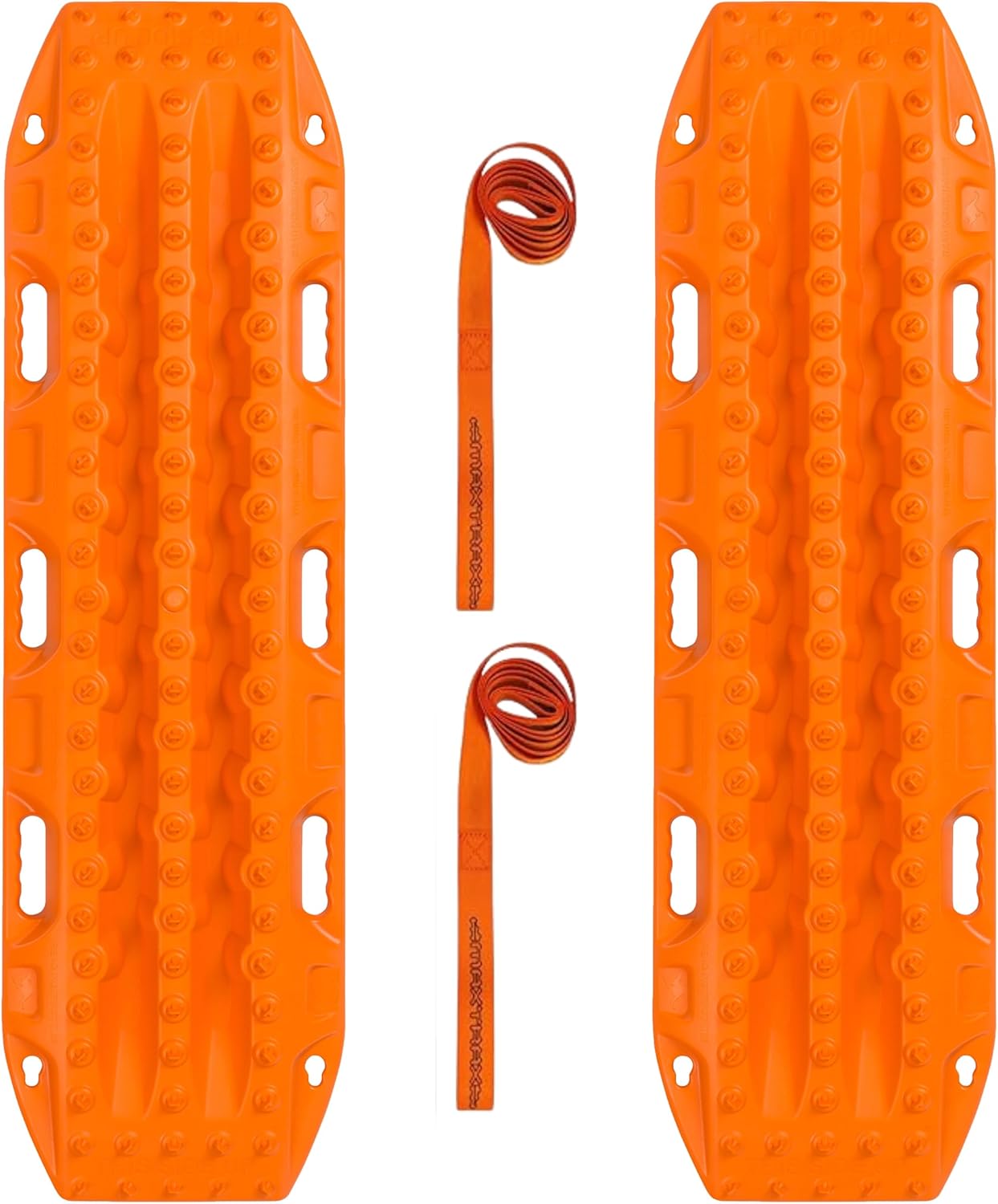
MaxTrax MKII Recovery Boards
The benchmark sand and snow recovery board. Place under a spinning tire to provide
immediate traction and a ramp out of a bog. Sold in pairs. Near-unbreakable HDPE construction rated
for full vehicle weight.
~$299–330 · ★ 4.9 · 500+ reviews
Shop →

Hi-Lift HL-485 48” Jack
The standard multi-purpose trail jack. Lifts, pulls, clamps, and converts to a
come-along with an accessory kit. The 48” model clears 35” tires on a 2” lift
without issues.
~$85–110 · ★ 4.7 · 3,800+
reviews
Shop →
Budget Alternative
X-BULL 3rd Gen Recovery Traction Boards — sand, mud & snow
Shop
→
6. Off Road+ Mode: One Button, Two Different Programs
Off Road+ is the most misunderstood system on the Rubicon. It is not simply a "more
aggressive off-road mode." It runs two fundamentally opposite calibrations depending on the
transfer
case position when the button is pressed. The same button press does different things in 4H versus 4L —
because
the physics of sand and rock crawling require opposite approaches.
Off Road+ in 4H — Sand & Speed Mode
When activated in any 4H position, Off Road+ configures the vehicle for momentum-based
off-roading on soft or loose surfaces:
- Throttle: More aggressive mapping — greater response for the same pedal input
- Transmission: Holds gears longer at higher RPM rather than upshifting for economy
- TCS: Engine cut disabled (same as single-press ESC), preventing power interruption
mid-acceleration
- ESC: Threshold raised — less likely to intervene during dynamic high-speed moves
- BLD: Raised threshold — less aggressive brake application on spinning wheels (useful in
sand where BLD can dig in)
- Rear Locker: Enables rear locker engagement in 4H Part-Time (combined with ESC Full
Off)
Design intent: Sand driving requires maintaining momentum above ~25 mph. Any system that
interrupts power at the wrong moment can cause the vehicle to bog and become stuck. Off Road+ 4H removes
those
interruptions while keeping enough safety margin (raised ESC, not fully disabled) for dynamic surfaces.
Off Road+ in 4L — Rock Crawl Mode
When activated in 4L, Off Road+ configures for the opposite requirement — precision at very
low
speed over hard technical terrain:
- Throttle: Softened mapping — more pedal travel required for the same torque, preventing
accidental wheel hop on rock
- Torque delivery: Smoother, more linear power curve optimized for 1–3 mph crawling
- BLD: More aggressive threshold — brakes spinning wheels more quickly to redirect torque
to
traction wheels on uneven rock
- ESC: Auto-disabled (4L disables ESC automatically), but BLD behavior is specifically
tuned
for rock surfaces
Design intent: On rock, sudden throttle inputs cause wheel hop — the tire bounces off
the
rock surface and loses all traction. Off Road+ 4L's softened throttle map makes smooth, controlled power
application easier, even with less experienced inputs.
7. Off Road Pages (Uconnect Telemetry)
The Uconnect infotainment system includes a dedicated set of Off Road Pages — real-time
vehicle
data screens designed specifically for trail use. These are accessed through the main Uconnect menu under
the
"Off-Road" or "4x4" section depending on software version.
| Page / Display |
What it shows & why it matters |
Pitch & Roll
Inclinometer |
Real-time forward/backward (pitch) and side-to-side (roll) angles in degrees. Critical for avoiding
rollover on side-hill traverses and knowing your approach angle on steep climbs. Most Jeep® enthusiasts
consider roll angles above 30° a warning zone. |
| Steering Angle |
Current front wheel steering angle. Useful on tight switchbacks and for understanding articulation
limits.
|
| Compass |
Magnetic heading updated in real-time. Useful for navigating on trails without cellular signal where
GPS
maps may be unavailable. |
| Altitude |
Current elevation above sea level. Useful context for understanding terrain and for trip logging. |
| Transfer Case Status |
Confirms current T-case position (2H / 4HF / 4H / 4L) visually on screen — useful confirmation before
committing to an obstacle. |
| Locker Status |
Shows front and rear locker engagement state. The indicator goes from flashing (engaging) to solid
(locked) here as well as on the dash cluster. |
| Throttle & Brake % |
Real-time throttle and brake application percentage. Useful for learning smooth input technique —
watching
this on a rock crawl reveals how much unnecessary throttle most drivers apply. |
| Tire Pressure (TPMS) |
Individual pressure for each tire. Invaluable for airing down — monitor all four simultaneously rather
than using a separate gauge on each tire. Note: TPMS sensors are optimized for on-road pressures and may
show warnings below ~25 PSI. |
Off Road Pages vs. Off Road+: These are completely separate systems. Off Road Pages are
informational — they display data without changing vehicle behavior. Off Road+ is
operational — it changes how the drivetrain, throttle, and electronics behave. You can have Off
Road
Pages open while in any drive mode, and enabling Off Road+ does not change what the pages display.
8. Tires: Pressure, Sizing & Upgrade Paths
Air Pressure: The Most Underused Tool
Reducing tire pressure increases the contact patch — the amount of tire touching the ground.
On sand, this is the single highest-impact adjustment you can make, more significant than any electronic or
mechanical setting. Airing from 35 PSI to 15 PSI dramatically increases flotation and traction. The
Rubicon’s TPMS page lets you monitor all four tires simultaneously as you air down, and many trail guides
specify PSI targets for specific terrain types. A portable compressor to re-inflate before returning to
pavement is essential equipment for any serious off-road use.
The three most important variables in any off-road scenario are tire pressure, approach angle,
and momentum — in that order. Every electronic system on this vehicle is secondary to getting
these three right.
🔨 Recommended Gear · Air Management
Affiliate links — we may earn a small commission at no additional cost to you.
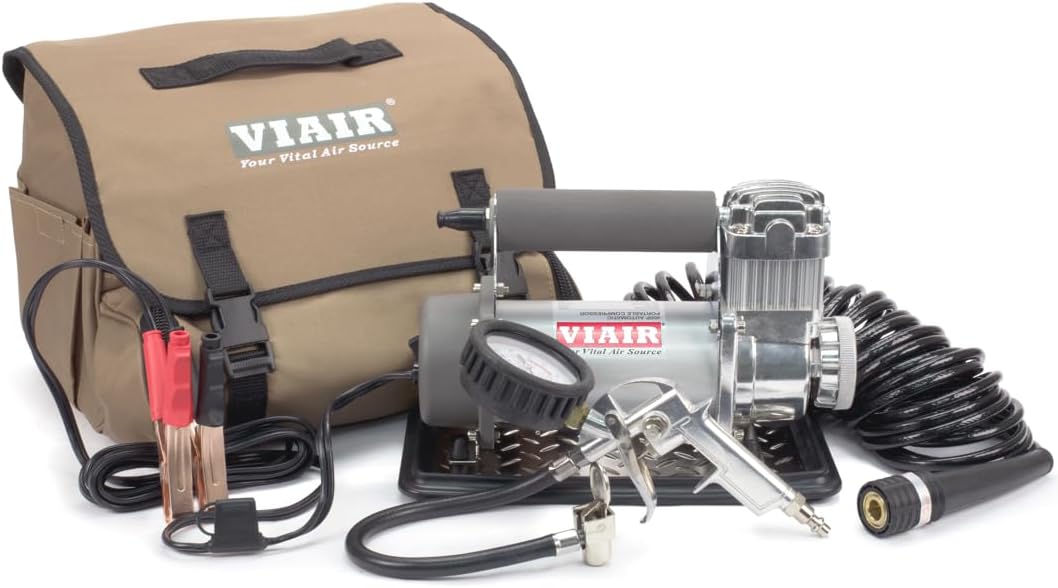
VIAIR 400P Automatic Portable Compressor
150 PSI max, 1.84 CFM, runs directly off the battery. Fills 35” tires from
15 PSI back to 35 PSI in under 4 minutes. The standard choice for serious trail drivers.
~$230–270 · ★ 4.4 · 1,200+
reviews
Shop
→
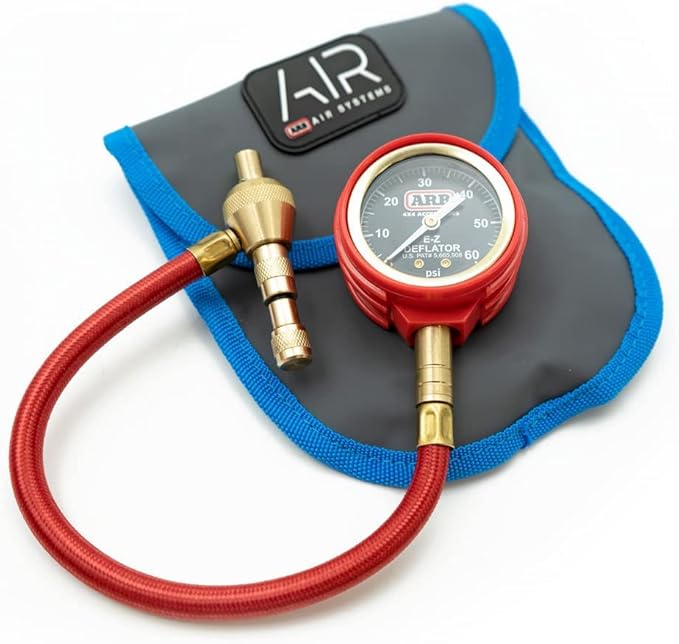
ARB E-Z Tire Deflator
Pre-set to your target PSI and deflate all four tires simultaneously to the
exact same pressure. The right tool for fast, consistent airing-down.
~$39–42 · ★ 4.5 · 3,730
reviews
Shop
→
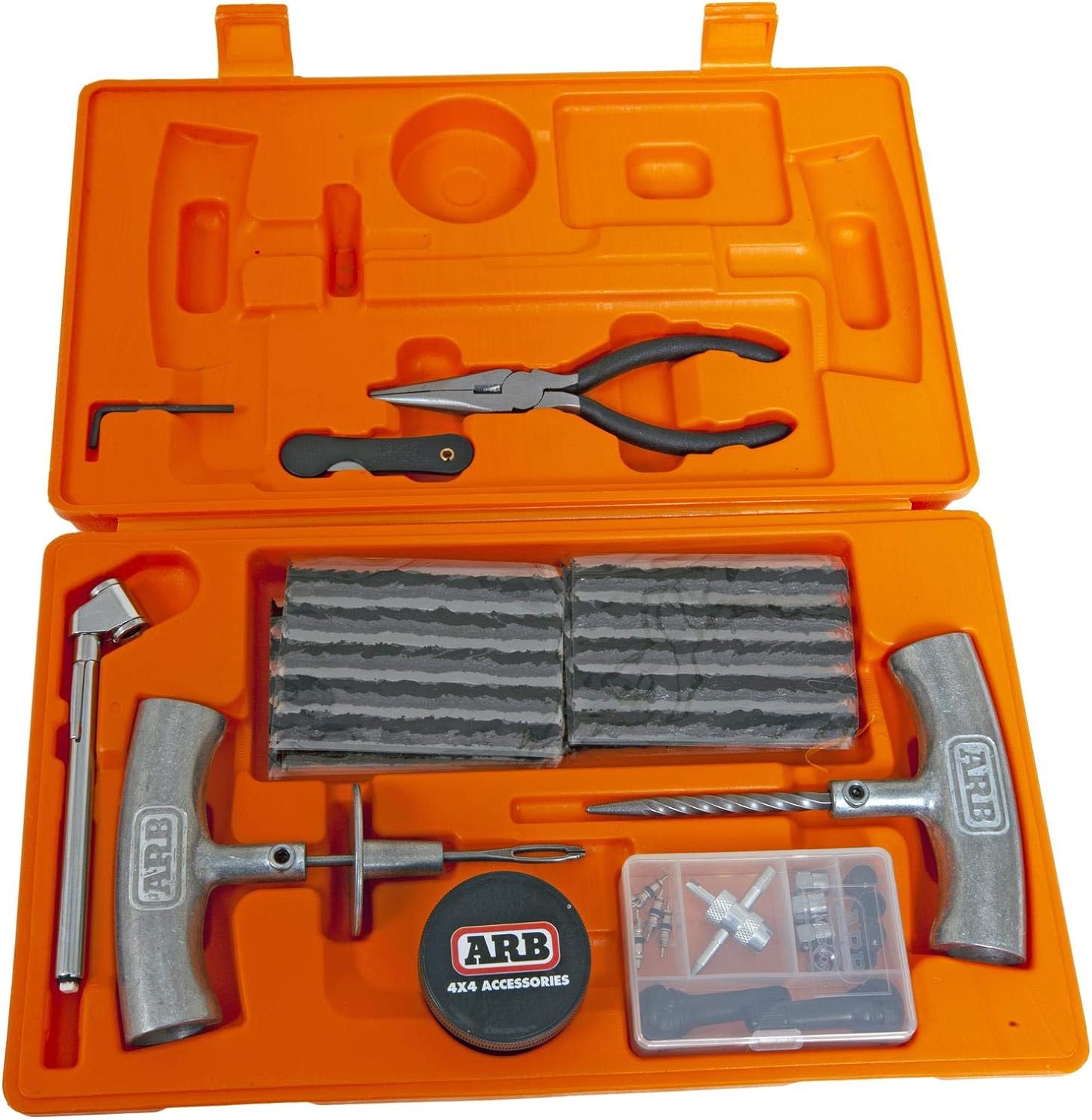
ARB Speedy Seal II Tire Repair Kit
Plug and re-inflate a punctured trail tire in minutes without breaking the bead.
Plugs, reamer, insertion tool, and CO² cartridges for remote repairs away from the vehicle.
~$45–55 · ★ 4.5 · 2,159
reviews
Shop
→
Budget Alternatives
Smittybilt 5.65 CFM Compressor — ~$150–170 ·
4.0★
Shop
→
JACO RapidFlow Tire Deflator with Gauge — includes PSI readout
Shop
→
VIAIR 88P Compact Compressor — 120 PSI · ideal for stock
33” tires
Shop
→
Factory Tire Sizes (2024–2026)
Every 2024–2026 Wrangler and Gladiator rolls off the line with tires between 31.5 and 34.4
inches. The JL platform’s generous fender clearances make upsizing more accessible than any prior Jeep
generation, but each step up demands progressively more supporting modifications: a 33-inch swap on a Sport
is nearly bolt-on, while a 40-inch build requires axle replacements, hydraulic steering, and a five-figure
budget.
| Trim |
Tire Size |
Diameter |
Axle Ratio |
Notes |
| Sport / Sport S |
P245/75R17 |
~31.5" |
3.45 |
Steel wheels (Sport), alloy (Sport S) |
| Sahara |
P255/70R18 |
~32.1" |
3.45 |
Only trim on 18" wheels |
| Willys |
LT285/70R17 |
~32.7" |
3.45 |
High-clearance fenders |
| Willys w/ Xtreme 35 Pkg |
LT315/70R17C |
~34.4" |
4.56 |
1.5" factory lift, BFG KO2s |
| Rubicon |
LT285/70R17 |
~32.7" |
4.10 |
Dana 44 front/rear |
| Rubicon w/ Xtreme 35 Pkg |
LT315/70R17C |
~34.4" |
4.56 |
Beadlock-capable wheels |
| Rubicon X (2024–25) |
LT285/70R17 std |
~32.7" |
4.10 |
Xtreme 35 Pkg optional |
| Rubicon X (2026) |
LT315/70R17C |
~34.4" |
4.56 |
Xtreme 35 now standard |
| Rubicon 392 |
LT315/70R17C |
~34.4" |
4.56 |
35s standard from 2024 |
The Xtreme 35 Tire Package bundles BFGoodrich KO2 all-terrains in
LT315/70R17C, beadlock-capable 17×8" wheels with a +12mm offset, a 1.5-inch suspension lift, 4.56:1 axle
gears, and a swing-gate reinforcement. Available as a ~$4,500 option on Willys and standard Rubicon;
standard on the 2026 Rubicon X and all 392 variants.
Gladiator JT differences: The Gladiator Willys runs a smaller LT255/75R17
(~32.0") versus the Wrangler Willys’ 285/70R17 (~32.7"). The Mojave uses a unique +37mm wheel offset versus
the standard +44mm. The Gladiator has no V8 option and its under-bed spare accommodates a maximum ~36.5-inch
tire.
33-Inch Upgrades: The Easiest Path
Going from the Sport’s 31.5-inch stock tires to 33s is a modest 1.5-inch increase that
requires no lift for street driving. The most popular size is 285/70R17 (32.7" actual, the
stock Rubicon tire), which bolts directly onto the factory 17×7.5" wheels without spacers. At full steering
lock, minor rubbing on the passenger side is possible — a common fix is adding a washer to the driver-side
steering stop bolt to equalize lock angles.
One caveat: Sport models with 3.45 axle gears will feel noticeably sluggish
with 33s. Models ordered with the 3.73 or 4.10 option handle 33s without any regearing concern.
35-Inch Upgrades: Real Work Begins
Non-Rubicon trims need 2.5 inches of lift minimum for 35-inch tires — most
installers recommend 2.5–3.5 inches for off-road use. A quality spacer lift (ReadyLIFT SST, ~$400–600) is
sufficient for street driving and light trails. Moderate-to-serious off-roading calls for a full suspension
lift — MetalCloak, Teraflex Sport ST3, or Clayton Premium kits run $1,200–$4,000.
The 2024+ Willys has a significant advantage: it comes with Rubicon
high-clearance fenders from the factory, making it the best non-Rubicon starting point for a 35-inch build.
A Willys with a 2-inch lift clears 35s comfortably. Stock Sport/Sahara low-clearance fenders provide roughly
2 inches less room than Rubicon highline fenders — options include swapping to used Rubicon flares
($300–800), flat fenders ($400–$1,000), or trimming inner liners.
Rubicons are nearly bolt-on for 35s. Owner after owner confirms running
315/70R17 BFG KO2s on stock Rubicon wheels with no spacers, no lift, and zero rubbing. For dedicated
off-road use with the sway bars disconnected, a 2-inch lift is recommended. The Rubicon’s 4.10 axle gears
handle 35s adequately — the effective ratio drops to about 3.83, roughly equivalent to a Sahara running
stock tires on 3.73 gears.
Regearing is strongly recommended for 35s on a 3.45-equipped Sport or
Sahara. Jeep’s own Xtreme Recon package uses 4.56 gears with 35-inch tires — that’s the target ratio. Full
regear cost (both axles): $1,500–$2,700 installed.
37-Inch Builds: The Serious Off-Road Sweet Spot
Running 37-inch tires requires a minimum 2-inch lift on a Rubicon, with 2.5
inches being the consensus sweet spot. The Rubicon X with the Xtreme 35 package (1.5-inch factory lift,
+12mm offset wheels, 4.56 gears) gives you a head start.
Beyond the lift: bump stop extensions of at least 2 inches on both axles
prevent tire-to-fender contact at full compression. The rear inner fender liner commonly needs trimming.
Stock Rubicon wheels have too much backspacing (6.25") for 37s — you need aftermarket wheels with 4.5–4.75
inches of backspacing or 1.25-inch spacers. An upgraded tie rod and drag link (Synergy, RPM Steering) is
highly recommended, as is a reinforced tailgate carrier hinge (Teraflex Alpha) for the ~85-pound 37-inch
spare.
Regearing to 4.88 is the standard recommendation for 37s. On stock 4.10
gears, the transmission rarely reaches 8th gear and highway driving feels sluggish. DrivingLine’s
instrumented testing confirmed that swapping to 4.88s with 37s “put our economy back to where we were on
35s.”
40-Inch Builds: A Full Platform Rebuild
Forty-inch tires transform a Wrangler into a fundamentally different vehicle. Minimum lift
is 3.5–4.5 inches with long-arm suspension. The critical requirement is axle
replacement: Dana 60 axles are the correct foundation. A Spicer Ultimate Dana 60 set runs
$16,000–$20,000; Dynatrac ProRock 60s and Currie RockJocks fall in a similar range. Budget junkyard Dana 60
builds start around $8,000–$10,000.
Additional mandatory upgrades: hydraulic-assist steering (PSC Motorsports,
~$2,500–$3,500) because electric power steering cannot reliably turn 40-inch tires, 1350-series CV
driveshafts, big brake kits (Teraflex Delta 14" or Dynatrac ProGrip), regearing to 5.13 or 5.38, and
flat/highline fenders (Motobilt, GenRight). Total build cost: $25,000–$50,000+ for a
serious off-road platform.
Gearing, Fuel Economy & Speedometer
The effective gear ratio formula: multiply the stock ratio by (stock tire diameter ÷ new
tire diameter). A Sport with 3.45 gears dropping from 31.5" to 35" tires effectively becomes a 3.10
ratio — a 10% loss. The 8-speed ZF automatic is remarkably forgiving — its two overdrive gears
partially compensate — but when you lose access to 8th gear entirely, highway fuel economy and cruising RPM
suffer noticeably.
Real-world fuel economy losses follow a rough rule: ~2 MPG per size
increment. A stock Rubicon averaging 20–23 highway MPG drops to 17–19 with 35s and 15–17 with 37s
(both on stock 4.10 gears). Regearing recovers 1–2 MPG by allowing the transmission to operate in its
optimal range.
Larger tires cause the speedometer to read slower than actual speed. A
Sport going from 31.5" to 35" accumulates an 11.1% error — at an indicated 60 MPH, you’re actually traveling
66.7. Recalibration is essential: the JScan app with an OBD2 adapter (~$75 total) is the
most popular budget option; the Tazer JL Mini ($150–280) offers plug-and-play convenience.
These tools are also critical for ABS and stability control accuracy.
Axle Durability & Braking
The Dana 30 front axle (Sport, Sahara, Willys) handles 33s without concern
and tolerates 35s for daily driving and moderate off-roading. At 37 inches, it becomes a genuine liability.
Swapping to used Rubicon Dana 44 takeoff axles (~$2,000/pair) is more cost-effective than building up a Dana
30.
The Rubicon’s Dana 44s handle 35s effortlessly and manage 37s well for
street and trail use. For aggressive rock crawling on 37s, an axle truss, upgraded ball joints, and
heavy-duty differential covers add meaningful insurance. At 40 inches, even reinforced Dana 44s are
operating at their limit.
Bigger tires degrade braking through increased rotational inertia and a
longer lever arm requiring more brake torque. At 33 inches, stock brakes are adequate across all trims. At
35 inches on a Rubicon, stock brakes perform acceptably (upgraded pads like PowerStop Z36 help). At 37
inches and above, a big brake kit — Teraflex Delta, Dynatrac ProGrip, or Mopar HD — is strongly recommended.
Quick Reference: Lift & Gear Recommendations
| Tire Size |
On Sport/Sahara |
On Willys |
On Rubicon |
On Rubicon X |
Regear Target (Auto) |
| 33" |
0–1.5" spacer lift |
Stock (bolt-on) |
Stock fitment |
Stock fitment |
Not needed (3.73+) |
| 35" |
2.5–3.5" + HC fenders |
2–2.5" lift |
0" street / 2" off-road |
Factory-equipped |
4.56 |
| 37" |
2.5–3.5" + HC fenders + axle concerns |
2.5–3.5" + fender work |
2–3.5" lift |
1–2.5" additional lift |
4.88 |
| 40" |
Not practical |
Not practical |
3.5–4.5" + Dana 60s |
3.5–4.5" + Dana 60s |
5.13–5.38 |
The single most impactful decision isn’t the tire size itself — it’s whether to regear.
The 8-speed automatic masks undergearing surprisingly well, but optimized gearing transforms the driving
experience, recovers fuel economy, and reduces drivetrain stress. If you’re going to 35s on anything below
4.10 gears, budget $1,500–$2,700 for a regear from the start. And if 37s are the goal, plan the build
holistically: lift, wheels, gears, steering reinforcement, bump stops, and brake upgrades form an
integrated system where skipping one component compromises the others.
Trim & Model Compatibility
Off-road feature availability across Wrangler JL (2018–2026) and Gladiator JT
(2020–2026)
trim levels
Key changes for 2024+: Selec-Trac and Rock-Trac Full-Time removed as standalone options on
gas Wranglers. Willys gained rear Tru-Lok electronic locker and Off-Road+ mode. All trims now include
Off-Road Pages on the standard 12.3" Uconnect 5 infotainment system. The Rubicon X debuted as the only gas
Wrangler with full-time AWD, factory 35s standard for 2026.
1. Transfer Case Modes by Trim
Three transfer cases serve the JL/JT platform: Command-Trac (2.72:1 low
range,
part-time only), Selec-Trac (2.72:1 low range, adds 4WD Auto full-time mode), and
Rock-Trac (4.0:1 low range, available in both part-time and full-time variants). The 2024
model
year eliminated Selec-Trac and Rock-Trac Full-Time as standalone options on gas Wranglers — making the 4xe
or
Rubicon X the only paths to factory full-time 4WD.
| Trim |
Wrangler JL (Gas) |
Wrangler 4xe |
Gladiator JT |
| Sport / Sport S |
Command-Trac std; Selec-Trac optional 2018–2023, removed 2024+ |
Selec-Trac std (2024+) |
Command-Trac std; Selec-Trac optional on Sport |
| Willys / Willys Sport |
Command-Trac std; Selec-Trac optional 2021–2023, removed 2024+ |
Selec-Trac std (2023+) |
Command-Trac std |
| Sahara |
Command-Trac std; Selec-Trac optional 2018–2023, removed 2024+ |
Selec-Trac std (2021+) |
Command-Trac std |
| High Altitude |
Command-Trac std; Selec-Trac optional 2021–2023 |
Selec-Trac std |
Command-Trac std |
| Mojave |
— |
— |
Command-Trac std; Selec-Trac optional (2021+) |
| Rubicon |
Rock-Trac part-time std; full-time optional 2021–2023, removed 2024+ |
Rock-Trac full-time std |
Rock-Trac part-time std; full-time optional 2021–2023 |
| Rubicon X (2024+) |
Rock-Trac full-time std |
Rock-Trac full-time std |
Rock-Trac full-time std |
| 392 / Moab 392 |
Selec-Trac std (2.72:1, no 2WD mode) |
— |
— |
2. Tru-Lok Electronic Differential Lockers
Front-and-rear Tru-Lok electromagnetic locking differentials have been a Rubicon hallmark
since
the JL's 2018 launch, but rear-only electronic lockers have spread to two other trims: Willys (from 2024)
and
Gladiator Mojave (from its 2020 debut).
| Trim |
Front Tru-Lok |
Rear Tru-Lok |
Notes |
| Sport / Sport S |
❌ |
❌ |
Open diffs; BLD provides electronic traction simulation |
| Willys (2018–2023) |
❌ |
❌ |
Trac-Lok limited-slip differential (rear only), not electronic locker |
| Willys (2024–2026) |
❌ |
✅ Standard |
Upgraded from LSD to electronic Tru-Lok rear locker for 2024 |
| Sahara |
❌ |
❌ |
Open diffs; optional LSD (2018–2023), removed 2024+ |
| High Altitude |
❌ |
❌ |
Open diffs |
| Gladiator Mojave |
❌ |
✅ Standard |
Rear-only Tru-Lok since 2020 launch |
| Rubicon (all variants) |
✅ Standard |
✅ Standard |
Full front + rear Tru-Lok on all Rubicon, Rubicon X, Rubicon 4xe |
| 392 / Moab 392 |
✅ Standard |
✅ Standard |
Inherits full Rubicon locker package |
3. Electronic Sway Bar Disconnect
The push-button electronic front sway bar disconnect is standard and exclusive to
every
Rubicon-family trim: Rubicon, Rubicon X, Rubicon 4xe, Rubicon 392, and Moab 392, on both the
Wrangler
JL and Gladiator JT. It operates in both 4H and 4L (JL improvement over JK) below approximately 18 mph and
auto-reconnects above ~25 mph. No other trim offers a factory sway bar disconnect of any kind.
4. Selec-Speed Control Availability
Selec-Speed Control is engine-dependent, not trim-dependent. SSC is a true
low-speed off-road cruise control that manages both throttle and brakes to hold a set speed (0.6–5 mph)
going
uphill, downhill, or on flat terrain in 4-Lo. Hill Descent Control (HDC) is brakes-only, downhill-only.
Neither
system is available with a manual transmission.
| Model Years |
3.6L V6 (eTorque on auto) |
2.0L Turbo I-4 |
3.0L EcoDiesel |
6.4L V8 (392) |
4xe PHEV |
| 2018–2020 |
HDC only |
HDC only |
HDC only |
— |
— |
| 2021 |
HDC only |
SSC |
SSC |
SSC |
SSC |
| 2022–2023 |
SSC (nearly universal) |
SSC |
SSC |
SSC |
SSC |
| 2024–2026 |
SSC standard |
SSC standard |
— |
SSC standard |
SSC standard |
Gladiator JT: SSC has been standard on all trims and all engines with
automatic
transmission since the 2020 launch.
5. Off-Road+ Mode Availability
Off-Road+ adjusts traction control intervention, throttle mapping, transmission shift
strategy,
and Selec-Speed behavior for off-road driving. In 4-High it optimizes for higher-speed terrain (sand,
gravel);
in 4-Low it tunes for slow-speed crawling. The feature debuted on the 2020 Gladiator Mojave and expanded to
the
Wrangler Rubicon for 2021. The 2024 refresh brought it to the Willys trim.
| Trim |
2018–2020 |
2021–2023 |
2024–2026 |
| Sport / Sport S |
❌ |
❌ |
❌ |
| Sahara / High Altitude |
❌ |
❌ |
❌ |
| Willys (JL, ICE + 4xe) |
❌ |
❌ |
✅ Standard |
| Rubicon (all variants) |
❌ |
✅ Standard |
✅ Standard |
| 392 / Moab 392 |
— |
✅ Standard |
✅ Standard |
| Gladiator Mojave |
✅ Standard |
✅ Standard |
✅ Standard |
| Gladiator Rubicon |
❌ |
✅ Standard |
✅ Standard |
6. Comprehensive Feature Matrix (2024–2026)
This table reflects the current-generation configuration after the 2024 refresh, covering
both
the Wrangler JL and Gladiator JT:
| Feature |
Sport / Sport S |
Willys |
Sahara |
High Alt |
Mojave (JT) |
Rubicon |
Rubicon X |
392 / Moab |
| Transfer case |
Command-Trac |
Command-Trac |
Command-Trac |
Command-Trac1 |
Command-Trac2 |
Rock-Trac PT |
Rock-Trac FT |
Selec-Trac |
| 4WD Auto mode |
❌ |
❌ |
❌1 |
✅ (4xe only)1 |
Optional2 |
❌ |
✅ |
✅ |
| Low range ratio |
2.72:1 |
2.72:1 |
2.72:1 |
2.72:1 |
2.72:1 |
4.0:1 |
4.0:1 |
2.72:1 |
| Front Tru-Lok |
❌ |
❌ |
❌ |
❌ |
❌ |
✅ |
✅ |
✅ |
| Rear Tru-Lok |
❌ |
✅ |
❌ |
❌ |
✅ |
✅ |
✅ |
✅ |
| E-sway bar disconnect |
❌ |
❌ |
❌ |
❌ |
❌ |
✅ |
✅ |
✅ |
| SSC (auto trans) |
✅3 |
✅3 |
✅3 |
✅3 |
✅ |
✅3 |
✅3 |
✅ |
| Off-Road+ mode |
❌ |
✅ |
❌ |
❌ |
✅ |
✅ |
✅ |
✅ |
| Off-Road Pages |
✅ |
✅ |
✅ |
✅ |
✅ |
✅ |
✅ |
✅ |
1 Gas High Altitude / Sahara: Command-Trac standard. 4xe versions get Selec-Trac
standard. The gas Selec-Trac option was eliminated for 2024+.
2 Gladiator Mojave: Selec-Trac available as an option.
3 SSC availability on JL Wranglers is engine-dependent: confirmed standard with
2.0L
turbo, 4xe, and 392. The 3.6L V6 received only HDC in 2021, gained SSC by 2022–2023, but some 2025 V6 builds
may
lack both SSC and HDC entirely. All Gladiator JT trims get SSC regardless of engine.
Data compiled from
owner’s manuals, factory build sheets, dealer window sticker verification, and community documentation
across 2018–2026 model years.